

SOS in Morse Code
Last updated:
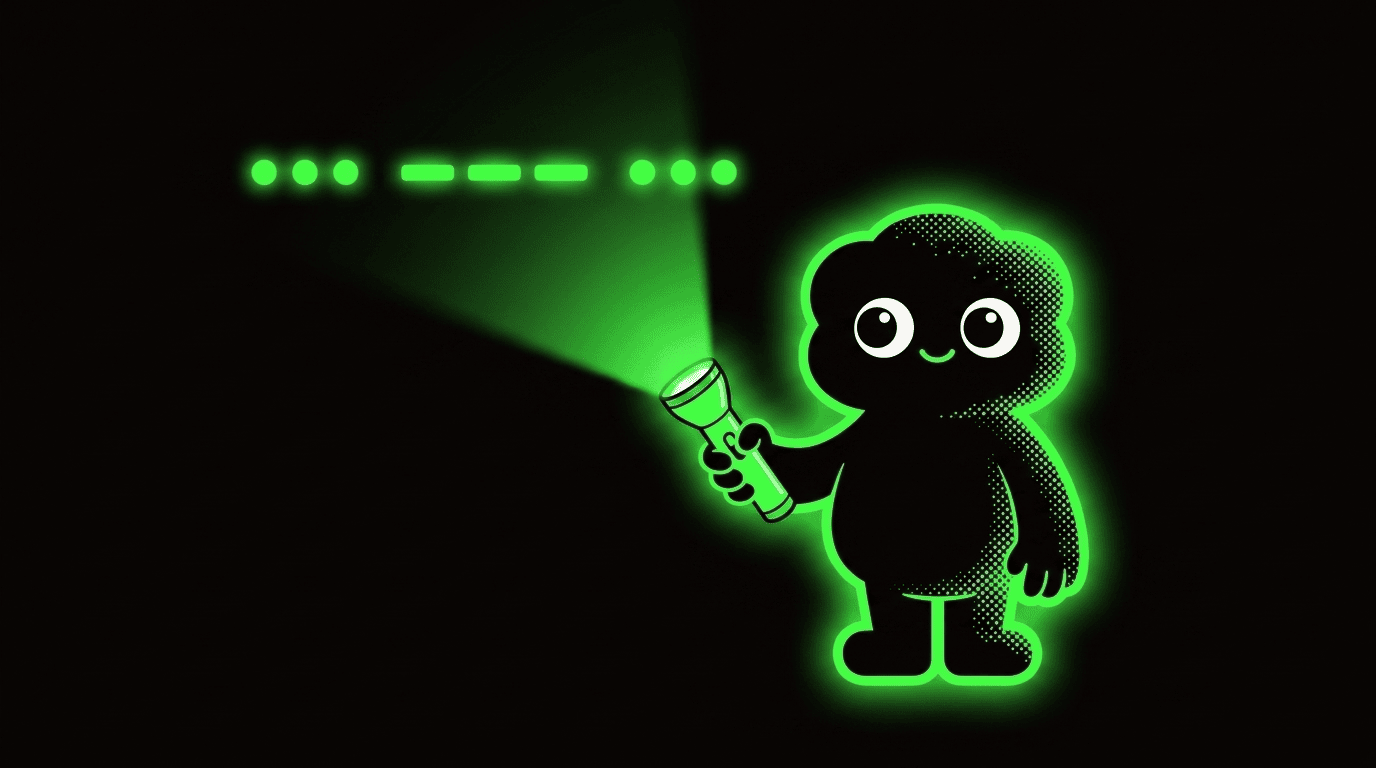
Table of Contents
SOS is the most recognized distress signal in the world. In Morse code it is written as ··· ——— ···: three dots, three dashes, three dots, sent as a single unbroken sequence with no internal letter gaps. The pattern was chosen for unambiguous recognition under poor conditions; it does not stand for any phrase despite the popular backronyms 'Save Our Ship' or 'Save Our Souls'.
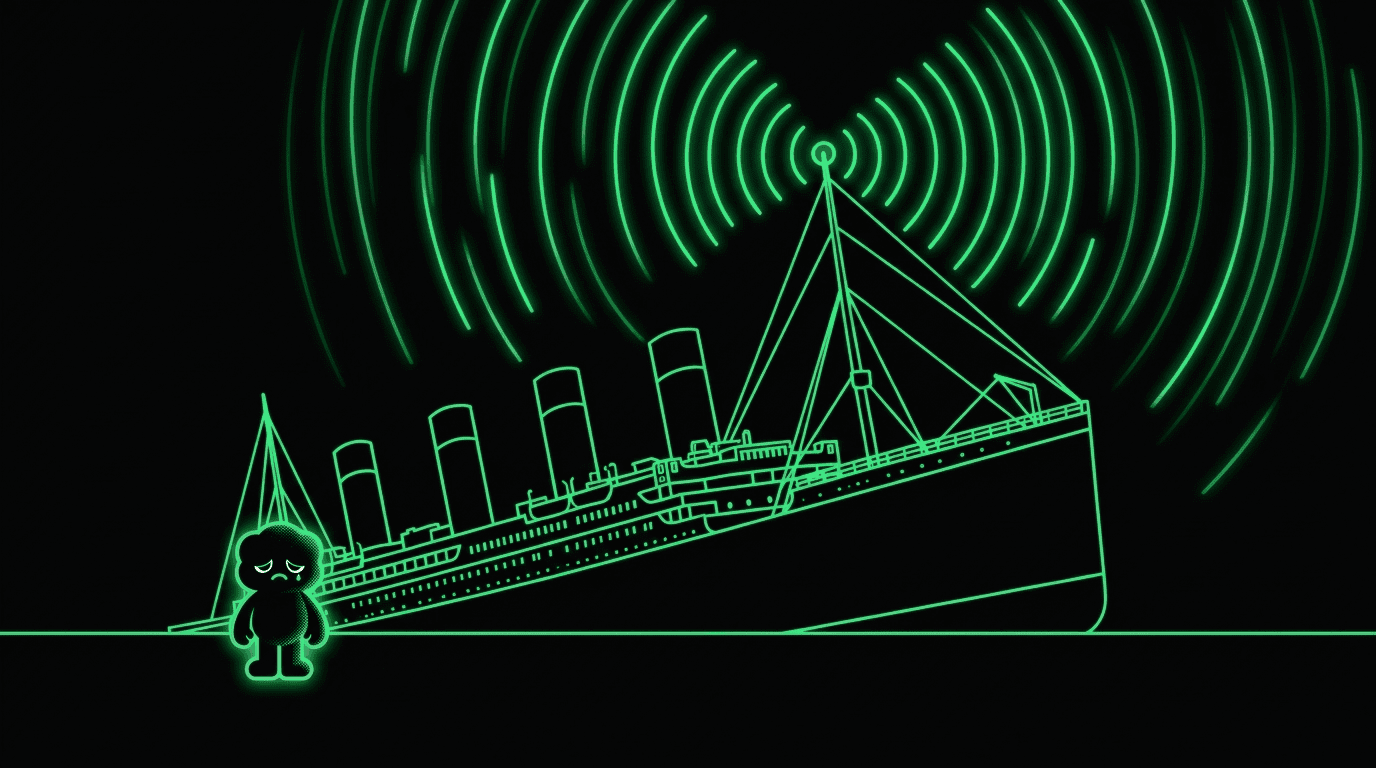
Adopted as the international maritime distress call at the 1906 Berlin International Wireless Telegraph Convention (effective 1908), SOS is still used today by sailors, pilots, hikers, and anyone in serious trouble. The signal famously brought rescue to the RMS Titanic in April 1912, where wireless operator Jack Phillips transmitted both the older 'CQD' and the newer 'SOS' calls, contributing to the rescue of more than 700 survivors.
What Does SOS Actually Mean?
SOS is not an abbreviation. The phrases "Save Our Souls" and "Save Our Ship" are folk etymologies that appeared after the signal was already in use. They are popular but historically incorrect.
The signal was chosen for one reason only: its sound shape. Nine evenly spaced elements (three short, three long, three short) form a pattern that is unmistakable, easy for an inexperienced operator to send, and impossible to confuse with normal text traffic.
From CQD to SOS: How the Signal Was Adopted
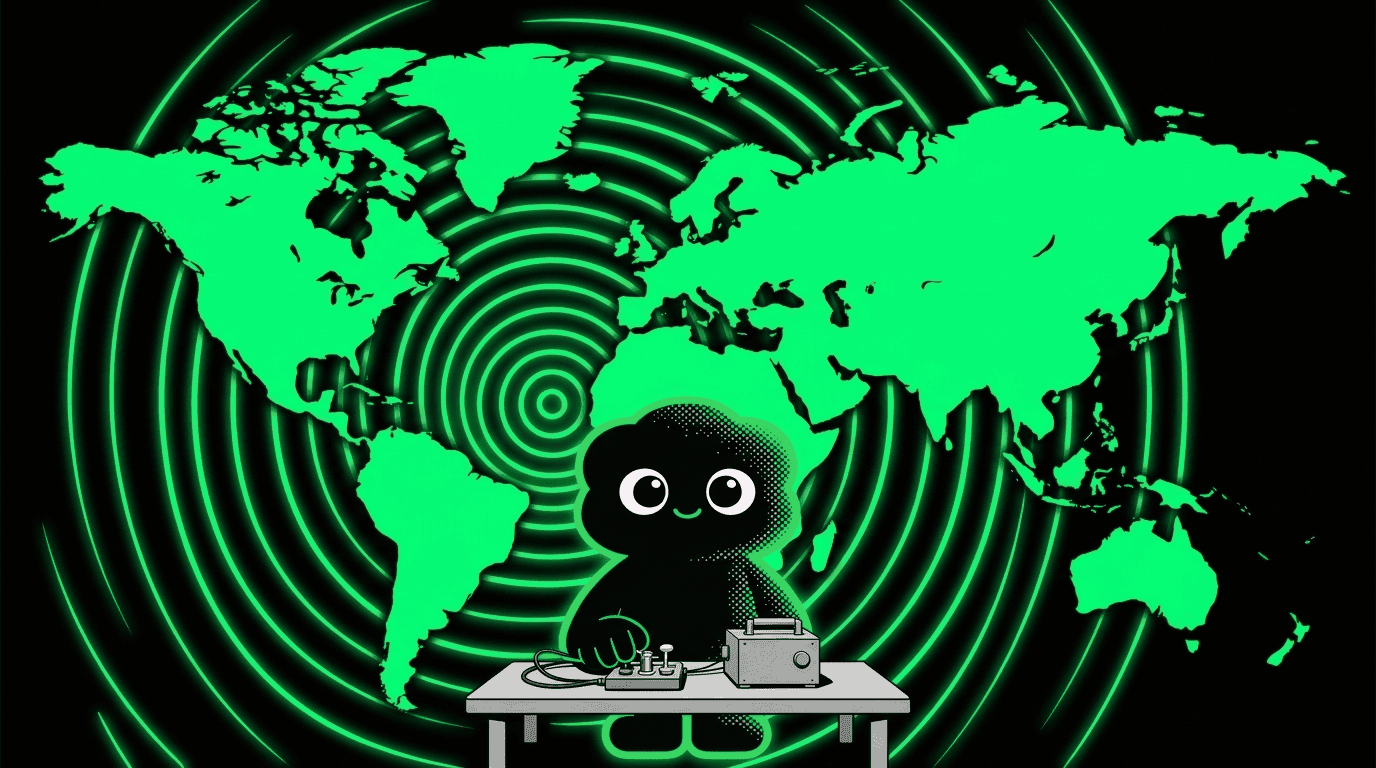
Before SOS, the most common distress call was CQD ("All stations, distress"), introduced by the Marconi company in 1904. The problem: CQD was company-specific and not all operators recognized it.
At the 1906 Berlin International Wireless Telegraph Convention, delegates agreed on a single universal distress sequence. The German signal ··· ——— ··· was adopted, and the International Radiotelegraph Convention formalized it on 1 July 1908. From that day, SOS became the world standard.
The Titanic Made SOS Famous
On the night of 14 April 1912, RMS Titanic's wireless operators Jack Phillips and Harold Bride first transmitted CQD after striking the iceberg. Bride is famously reported to have joked to Phillips, "Send SOS. It is the new call, and it may be your last chance to send it."
Both signals went out that night. The Titanic disaster pushed governments and shipping companies to take wireless distress procedures seriously, and SOS quickly displaced CQD in actual use.
Why Three Dots, Three Dashes, Three Dots?
SOS is sent as a prosign, not as three letters. A prosign is a continuous Morse sequence with no inter-character spaces. If you sent S, O, and S as separate letters you would get ··· ——— ··· with two letter gaps. The SOS prosign deletes those gaps.
The result is a single rhythmic block: di-di-dit dah-dah-dah di-di-dit. Even an operator who has never trained in Morse can usually copy SOS after hearing it once.
How to Signal SOS Today
Morse skills are no longer required at sea (the U.S. Coast Guard dropped the requirement in 1995, ITU followed in 1999), but SOS remains valid and recognized. You can send it with anything that produces a pulse:
- • Sound: Whistle, horn, or banging on metal. Three short, three long, three short. Pause. Repeat.
- • Light: Flashlight, mirror, signal lamp, or phone screen. Short flashes for dots, long flashes for dashes.
- • Visible marks: SOS stamped in snow, beach sand, or formed with rocks is still recognized by aircraft and satellites.

A Note on Misuse
Sending a false distress signal is a serious offense in every country with maritime or aviation law. SOS triggers real rescue operations that cost lives and money. Use it only when there is genuine danger to life.
Frequently Asked Questions
Does anyone still listen for SOS?
Continuous human listening watches on the old 500 kHz distress frequency ended in 1999. Most maritime distress traffic now goes through GMDSS (satellite EPIRBs, DSC radios). But amateur radio operators, search-and-rescue teams, and ship crews still recognize and act on a Morse SOS, especially when transmitted by light or sound on land.
Is SOS still legal to send?
Yes, when you are in genuine distress. The signal is reserved for real emergencies. Sending SOS as a joke or test on any actual radio frequency is illegal in most jurisdictions.
How long is each dot and dash?
By standard timing, a dash is three times the length of a dot. For visual SOS with a flashlight, one second per dot and three seconds per dash works well: short, short, short, long, long, long, short, short, short. Pause for several seconds, then repeat.
Want to send SOS with your phone? Open the Flashlight Signaler
Author

MorseKit is built and maintained by Firstpoint. Every character table on the site follows ITU-R M.1677-1: the dot and dash ratios, the letter and word gaps, and the ITU punctuation set. One dataset drives the translator, the audio engine and the printable cheat sheets, so a correction reaches all three at once. Alongside International Morse the team maintains nine regional variants, including Wabun, Cyrillic, Greek and Arabic, plus 42 Q codes and 18 prosigns, and the same people build the MorseKit apps for iOS and Android. Where a fact rests on a published standard the guides cite it, and where something has not been verified the page says so.